
Blockchain Technology
The Basis and Fundamenals of Blockchain simplified

Summary
Introduction to Blockchain
How Blockchain works
Blockchain Consensus Mechanisms
Different Types of Consensus Mechanisms
Proof of work (PoS)
Proof of Stake (PoS)
Delegated Proof of stake (dPoS)
Key Takeaways
Introduction to Blockchain
Blocks: contain a collection of transactions or data, Think of it as a page in a ledger, and when full, it gets sealed and connected to the next page.
Chain: These blocks are arranged in chronological order and linked together to form a chain.
So, A Blockchain consists of a series of blocks, with each block containing transaction data and other information. What makes blockchain unique is its strong security measures, transparency, and its design that protects against unauthorized changes.
How Blockchain work
Here’s a straightforward flow chart of how blockchain works:
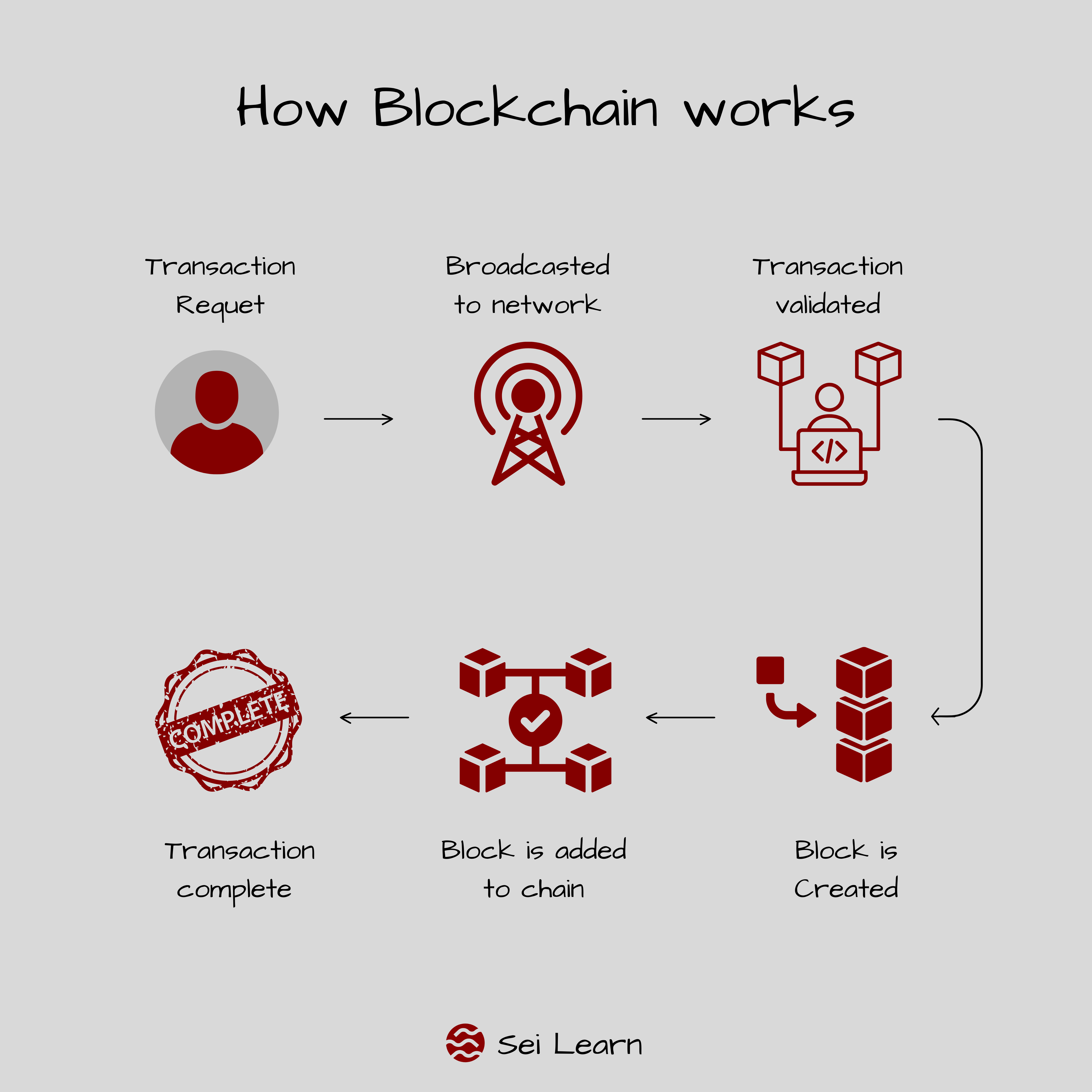
Understanding How Blockchain Works (Step-by-Step)
Transaction Request: When an individual initiates a transaction, such as sending cryptocurrency, this request is sent out to the blockchain network.
Broadcasted to Network: The transaction request is transmitted to the network of computers (nodes) that form part of the blockchain.
Validation: These nodes verify if the transaction is legitimate. Based on the type of consensus mechanism employed (which will be discussed next), nodes ensure that everything is accurate (e.g., adequate funds, no double-spending, etc.).
Block is Created: Once verified, the transaction is included in a block along with other transactions occurring at the same time.
Adding the Block to the Chain: The block is then connected to the previous one, creating an unbroken chain. The new block is appended to the blockchain and is visible to all participants on the network.
Transaction complete: Once the block is added, the transaction is finalized, and it cannot be altered.
Blockchain Concensus mechanism
A consensus mechanism is a process used in blockchain to make sure that everyone involved in the network’s validation process agrees on the transactions. Since blockchains are decentralized, there isn't a single authority that can verify the transactions. That's where consensus mechanisms come in.
Now, Let's explore the types
Different Types of Consensus Mechanisms
There are different types of concensus mechanisms but we would be discussing majorly the most important once which are Proof of Work (PoW), Proof of Stake (PoS) and Delegated Proof of Stake (dPoS)
Proof of Work (PoW)
In Proof of Work, miners use their computers to solve difficult math problems (computational puzzles). These problems are hard to solve but easy for others to check. The first miner to solve the problem gets to add a new block of transactions to the blockchain and is rewarded with newly created cryptocurrency (like Bitcoin) and transaction fees.
Bitcoin uses this consensus mechanism
Proof of Stake (PoS)
Validators in the PoS system lock up their cryptocurrency as a stake to take part in the validation process, rather than relying on computational power like PoW.
Validators are randomly selected to create new blocks and earn rewards based on the cryptocurrency they staked.
Ethereum 2.0 and Sei use this consensus mechanism
Delegated Proof of Stake (dPoS)
In Delegated Proof of Stake, token holders vote for a small group of delegates to validate transactions for them instead of all participants validating transactions. These elected delegates then confirm and add new blocks to the blockchain.
Key Takeaway
Blockchain is like a digital ledger that is secure, transparent and decentralized No one person or group controls it.
Transactions are checked by a network of computers (nodes). Once they're added to the blockchain, they can't be changed.
Proof of Work (PoW) uses a lot of computer power to solve puzzles for transaction checks. This makes it very secure, but it uses a lot of energy and is slow.
Proof of Stake (PoS) picks checkers based on the cryptocurrency they stake on the network. This uses less energy, but it’s a little centralized.
Delegated Proof of Stake (DPoS) works by choosing delegates for faster checks and growth, but it is more centralized.